
Precision Finishing Technical Articles
Explore our collection of technical articles and industry publications covering two-wheel flat honing, lapping mechanics, precision grinding, and surface finishing technology.
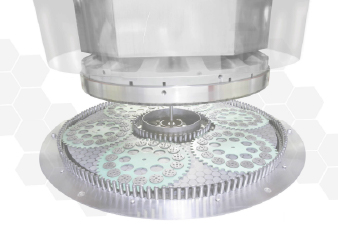
Grinding is a finishing process that removes unwanted material through abrasion to achieve clean, even surfaces and precise specifications. Common methods include Blanchard grinding for high material removal on large parts, surface grinding for controlled multi-step finishing, and precision grinding for micron-level accuracy and superior surface quality. With over 50 years of expertise, Stähli specializes in advanced precision grinding solutions, offering customizable single-, double-, and innovative three-wheel machines that deliver unmatched accuracy, throughput, and efficiency. Backed by in-house production capabilities and ISO 9001:2015 certification, Stähli provides end-to-end support to meet even the most demanding finishing challenges.
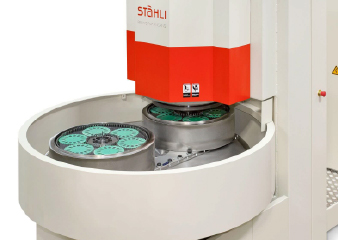
Stähli is committed to delivering dependable, innovative finishing equipment supported by industry-leading processes. Building on the proven precision of the DLM Series, the FH3 Flat Honing series delivers micron-level accuracy while dramatically increasing throughput. Unlike the traditional two-wheel DLM design, the FH3 introduces a three-wheel system that allows continuous loading during operation, reducing downtime and maximizing productivity. Fully customizable and automation-ready, the FH3 supports remote maintenance and works across a wide range of materials and industries, setting a new standard for precision, efficiency, and performance.
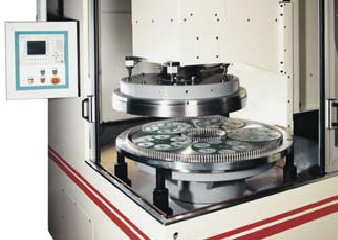
Many manufacturers are replacing traditional flat lapping with flat honing (clean lapping), a faster, cleaner, and more controllable process that meets or exceeds lapping-level precision. By using fixed bonded abrasives instead of loose slurry, flat honing eliminates the “black magic” of lapping, delivers dramatically higher stock removal rates, and achieves micron-level consistency with improved automation potential. Flat honing reduces processing and cleaning time, lowers operating costs, and can often replace multiple grinding or lapping machines. While loose abrasive lapping still has a role in ultra-thin or extreme applications, flat honing has become the preferred solution for high-precision flatwork requiring higher throughput, cleaner parts, and stronger ROI.
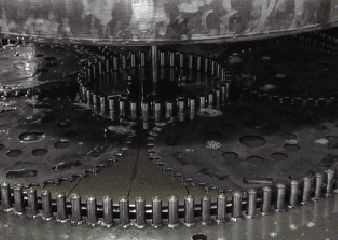
Spartan Carbide significantly increased production efficiency by replacing single-sided grinding with the Stähli DLM 700 flat-honing machine. By simultaneously finishing the top and bottom of carbide inserts, Spartan eliminated major production bottlenecks, reduced labor and setup time, and achieved consistent ±0.0001-inch tolerances. Output increased from 900–1,000 inserts per shift on single-sided grinders to 4,000–5,000 inserts per shift on the DLM 700. This productivity gain allowed Spartan to remove multiple legacy machines, streamline operations, and even take on additional contract work—demonstrating the powerful impact of Stähli’s flat honing technology.

Facing severe aerospace bearing shortages and long lead times, Emerson Power Transmission adopted Stähli’s flat honing technology to increase capacity, improve precision, and shorten delivery cycles. Flat honing replaced legacy flat grinding and lapping processes, reducing setup times from over an hour to minutes while achieving sub-micron tolerances and superior surface finishes. The process enabled faster stock removal, improved groove alignment, and greater process control through programmable “recipes.” Beyond solving production bottlenecks, flat honing delivered unexpected quality, measurement, and automation benefits—allowing Emerson to expand into higher-performance aerospace and rotary-wing bearing markets while strengthening overall manufacturing capability and customer confidence.
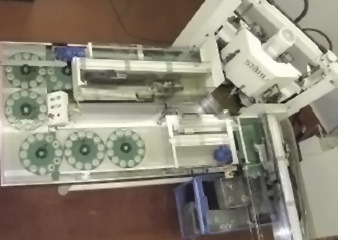
Traditional flat lapping uses loose abrasive slurry to achieve flatness and concentricity, but it is slow, messy, and highly dependent on operator experience. Many manufacturers are replacing lapping with flat honing (clean lapping), which uses fixed bonded CBN or diamond abrasives to deliver equal or greater precision with far higher efficiency. Flat honing removes stock 10–20 times faster than lapping, achieves sub-micron tolerances, reduces setup and retooling time to minutes, and dramatically increases throughput—especially in hard materials like tungsten carbide. With cleaner processing, lower labor costs, and superior consistency, flat honing has become a powerful alternative for high-precision grinding and lapping applications.

ProLap expanded its precision and material-processing capabilities by adopting the Stähli DLM 700 double-sided flat-honing machine. Using fixed CBN and diamond abrasives, ProLap now achieves tolerances as tight as ±0.00008″ (±2 μm) with surface finishes as fine as 2–4 Ra—while dramatically reducing cycle times. The DLM 700 enables simultaneous two-sided processing, faster stock removal, and single-setup completion for challenging steel and ceramic components. This technology has allowed ProLap to replace multi-step grinding and lapping operations, improve consistency, and extend its services across aerospace, medical, semiconductor, and advanced ceramic applications.

The Technique of Lapping by A.W. Stähli is a detailed technical guide to the traditional lapping process used to achieve ultra-flat, precise surfaces. It explains how loose abrasive grains suspended in a fluid between two rubbing surfaces remove material through a rolling and kneading action to produce flatness, parallelism, and fine surface finishes. The publication covers the fundamentals of lapping mechanics, machine types (including single-plate and centerless lapping), choice and behavior of abrasive powders and fluids, surface finish quality, accuracy achievable in production, and how to maintain and inspect working plates. The work serves as a practical reference on achieving high precision and consistency in lapping operations.

Flat Honing and Lapping with Two-Wheel Machines explains the principles and practice of two-wheel flat honing and lapping technology, focusing on machines like Stähli’s DLM series. It describes how two rotating working wheels with fixed abrasives or traditional lapping compounds achieve precise, high-quality flat and parallel surfaces. The article covers machine design, key features, the basic lapping/flat-honing processes (“clean lapping”), workpiece handling, measurement results, and supporting fixtures for loading and unloading. It also discusses applications, differences between single- and two-wheel systems, and future uses, providing a technical foundation for users seeking consistent, efficient, and high-precision surface finishing.

Microfinishing Yesterday–Today and Tomorrow from Micron to Nano and Ångström explores the evolution of ultra‑precision surface finishing from traditional techniques to cutting‑edge processes capable of achieving tolerances and surface qualities at micron, nanometer, and even Ångström scales. It reviews historic developments in single‑wheel lapping and polishing, and highlights advancements such as double‑wheel flat honing (clean lapping) that combine high stock removal with exceptional precision. The publication also discusses how improved measurement technology and machine design continue to push the limits of flatness and surface finish, and how future innovations will shape high‑precision manufacturing.
Connect With The Experts
Better is always within reach—and we know the way.
Reach out to our team to show you the direction.